
Dr. Jürgen Skripalle
MANAGING DIRECTOR CENTER OF COMPETENCE AFM

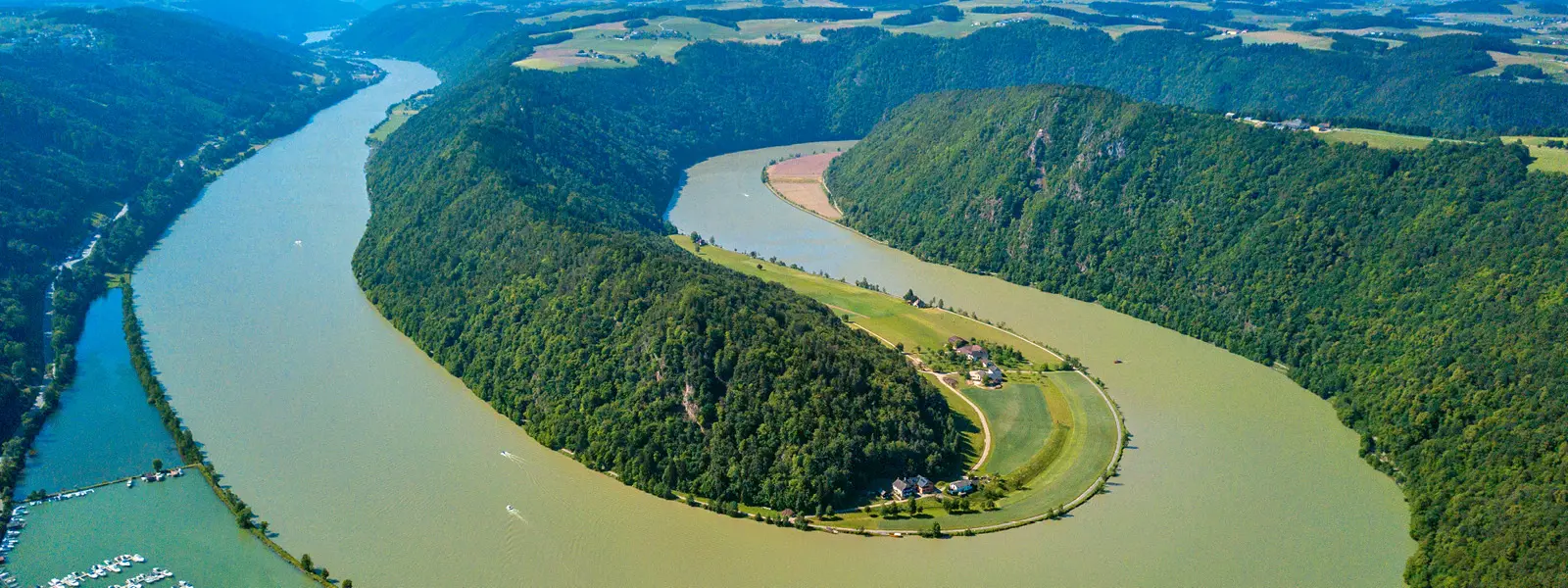
Reliable flow measurement is crucial for flood protection and monitoring of minimum ecological discharge. With FLUVIUS , we measure precisely and reliably in real time – from small streams to large river systems with high suspended sediment concentrations.
With up to 10 acoustic measurement paths, FLUVIUS offers the highest accuracy, repeatability, and linearity across the entire measuring range. Flow rate is precisely determined according to ISO 6416 based on cross-sectional geometry, water level, and velocity. Our automatic velocity profile approximation reduces the need for time-consuming on-site calibrations, accounts for complex flow patterns, and enables easy setup and maintenance via the platform-independent web interface – optionally with responder technology for large rivers.
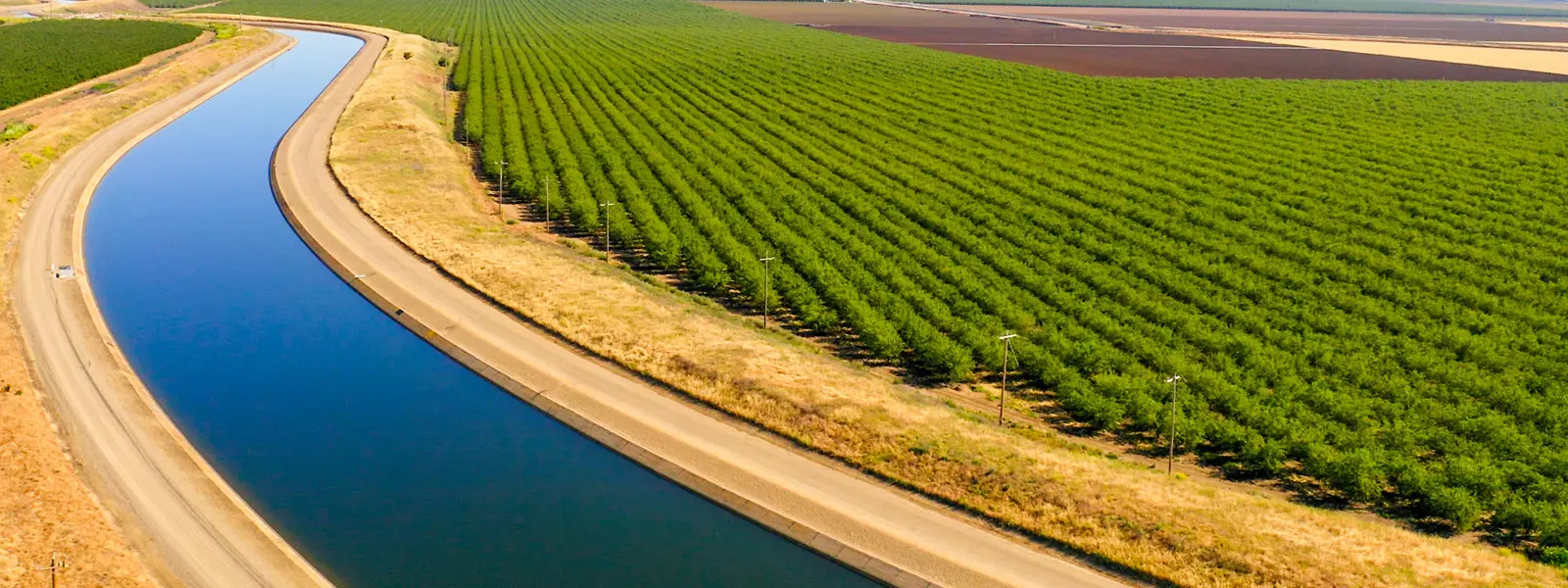
FLUVIUS is a flexible solution for generating precise measurement data in canals and rivers with widths from 20 m to 1000 m. It is unaffected by uneven flow conditions (e.g., at locks or gates/weirs). Both water level and flow velocity are recorded precisely. Applications range from river monitoring for flood protection to measuring water distribution in complex irrigation systems.
Water level and flow velocity measurements can be used as input for numerous automation systems. Depending on the application, weirs, locks, or turbines can be automatically controlled to prevent damage, for example. Alternatively, the data can be used in early warning systems for automated alerting, such as in flood protection.
Historical and real-time data support risk management and the planning of infrastructure decisions. Simulations can be developed based on this data and incorporated into the decision-making process.
Prediction systems for precipitation and snowmelt can be integrated into measurement technology to react proactively.
Long-term measurement data helps with planning, maintenance, and infrastructure decisions.
The ideal sensor for a FLUVIUS system is selected based on the acoustic path length and the sediment load. The ultrasonic measurement signal can be attenuated by friction and suspended particles. Lower frequencies offer significantly better signal quality, especially with a high solids content or large distances between the transducers. For example, a path length of 200 m with a sediment load of 300 g/m³ results in the optimal sensor type TD-28/18.

FLUVIUS is an ultrasonic time-of-flight system designed for continuous flow monitoring in natural or man-made watercourses. Fluvius is a measuring system with up to 8 acoustic paths and operates bidirectionally without causing flow obstructions or pressure losses. Accurate flow measurement is crucial for flood control and for monitoring minimum ecological discharge. Fluvius is suitable for use in everything from small streams to vast river systems with high sediment concentrations.

FLUVIUS is an ultrasonic flowmeter that uses the transit-time measurement principle. An ultrasonic pulse is sent both with and against the flow direction. The difference in signal transit time is then evaluated. In combination with water level measurement and cross-sectional area, FLUVIUS determines the precise flow rate across its entire measuring range. FLUVIUS can measure in up to 8 acoustic paths, e.g., in four planes with two intersecting paths each.

Cross-currents in channels can affect measurement accuracy, but these can be effectively eliminated by a crosswise arrangement of four transducers. In closed pipes with strongly fluctuating water levels, multiple acoustic paths, activated by rising water levels, ensure consistent measurements. Additionally, a system with paths layered in parallel planes enables precise flow measurement without time-consuming hydrometric calibration.
Are you interested in our services or another customer segment? We look forward to hearing from you.
Leave your contact details. You will receive the requested document immediately at your email address. Your data will not be used for advertising purposes without your consent.