
Gary Vincent
Managing Director UK & Ireland

With i2O Advanced Pressure Management, you control the pressure in your water network precisely and remotely. Automatic optimization reduces leakage, bursts and energy consumption and extends the lifespan of your network assets.
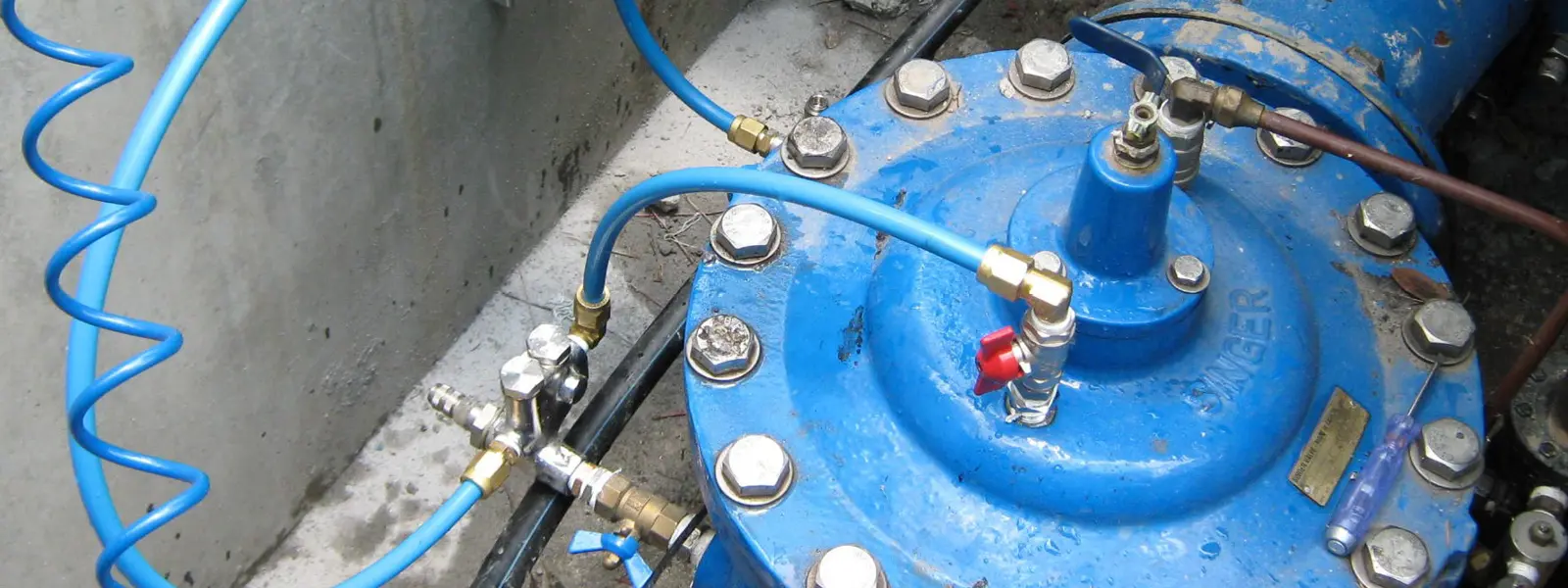
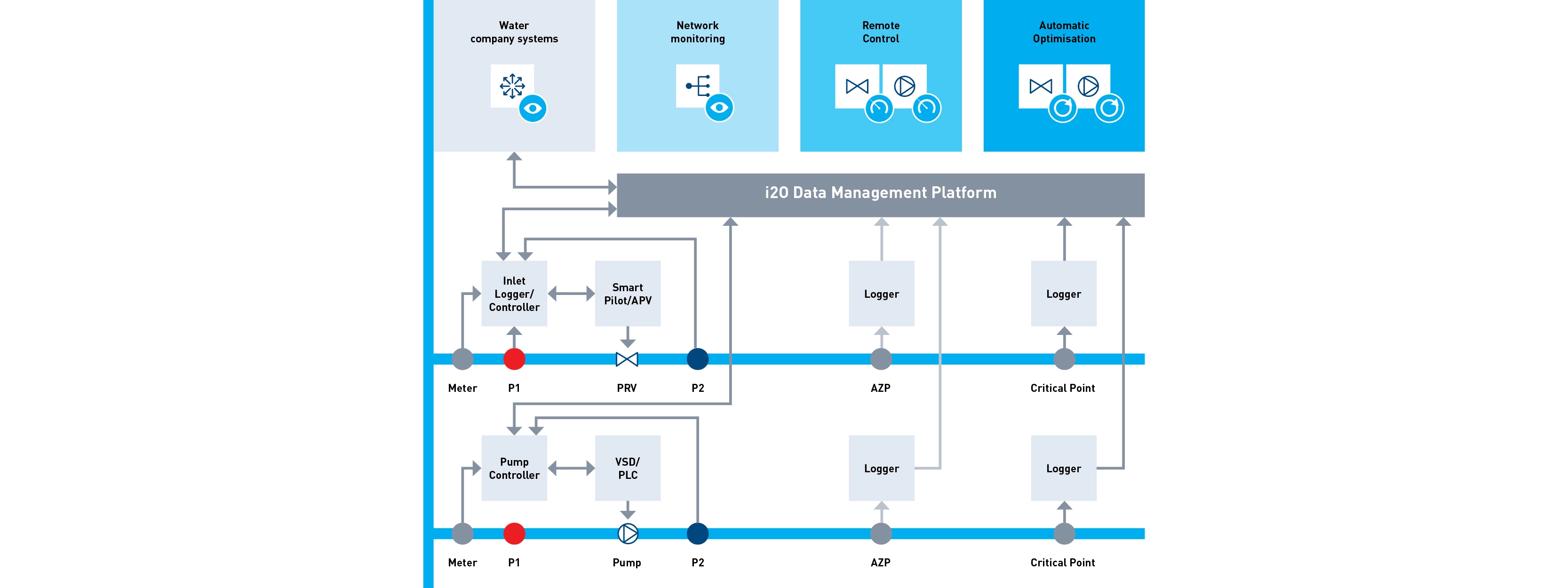
i2O Advanced Pressure Management is our solution for the remote control and automatic optimization of pressure in water networks. It combines network visibility and intelligence with reliabile dataloggers and PRV controllers ,. This allows you to deliver the minimal pressure to your customers, but no more, helping to reduce leakage, bursts and operational costs.
Pressure is optimized automatically and continuously, based on the current demand patterns and operating characteristics of each area of your network. Our patent protected technologies are specifically designed to operate without introducing burst producing transient events.
Our Datalogging and Advanced Pressure Management solutions are combined into a single, network wide, intuitive cloud-based platform.
The platform is secure, easy to use and designed for use in your day-to-day operational network management. Multiple users can access data according to their needs.
Built for enterprise scalability and flexibility, the solution adapts to the requirements of each part of your network.
The platform is designed to deliver an even lower total cost of ownership for your pressure management.
Smart Pressure Management is a journey. Start at the level that suits each area of your network and upgrade whenever your requirements change.Our advanced controllers are agnostic and can be used on any PRV brand.

Loggers record pressure, flow and temperature data at the inlet, critical point and/or AZP of your network. Over-the-air upgrades deliver new functionality without replacing the devices. Thanks to hot-swap, a new logger inherits the configuration of the device it replaces.
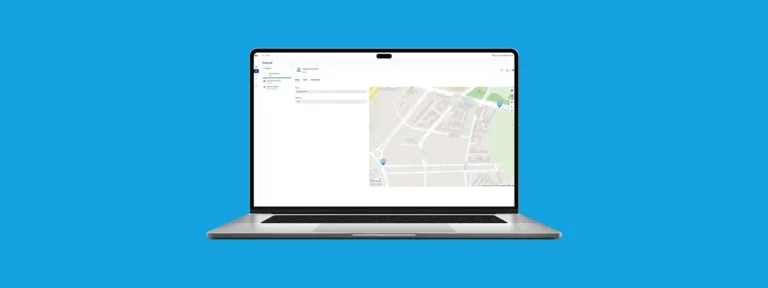
A dashboard with graphs and alarms gives you full visibility of pressures and flows across your network. Network Monitoring accepts data from i2O as well as third-party loggers and telemetry systems. It helps you identify bursts and areas of high leakage and measure the results of your pressure management strategies.
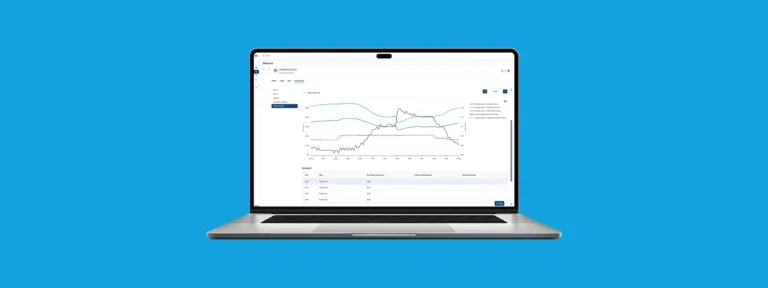
Your operations staff set pressures on PRVs and pumps remotely, without the need for site visits. Choose between Basic Control, Timed Control with up to 96 settings over 24 hours, and Flow Modulated Control, where the outlet pressure varies as a function of flow rate.
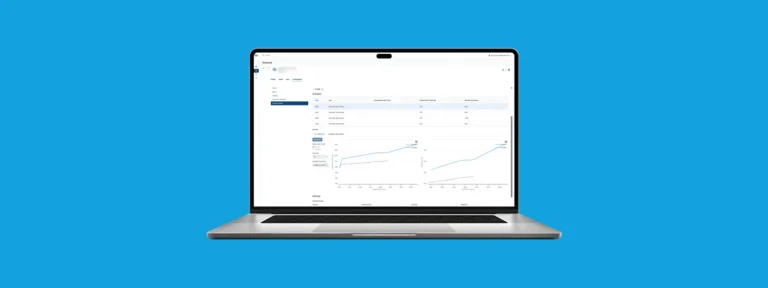
A patented self-learning system continuously adjusts the inlet pressure to deliver a stable target pressure at the critical point. The system learns the relationship between pressure loss, flow and time in each PMA or zone and controls pressure on an ongoing basis, with no manual intervention.
Are you interested in this service or our offerings from another customer segment? We look forward to hearing from you.
Do you have any further questions? Don't hesitate to contact us!
Reducing water loss starts with a water balance that separates real losses, such as leaks and bursts, from apparent losses, such as metering errors and unauthorised consumption. Dividing the network into district metered areas (DMAs) makes it possible to locate losses, prioritise zones and track progress over time. The most effective measures against real losses are pressure management, active leak detection, fast and high-quality repairs and targeted pipe renewal. Pressure management stands out because it reduces leakage across an entire zone immediately and without excavation. GWF supports water utilities with i2O Advanced Pressure Management, combining pressure control hardware and software to reduce water loss across the network.
The flow rate of every leak increases with pressure, so excess pressure in a supply zone directly increases the volume of water lost. Pressure management lowers network pressure to the minimum level required to supply all customers reliably, especially at night when demand is low and pressure would otherwise rise. Adjusting pressure based on time, flow or measurements at the critical point of a zone keeps service levels stable while reducing leakage from existing leaks. At the same time, lower and more stable pressure slows the formation of new leaks. With the i2O solution, GWF offers pressure management for water networks with time-based, flow-modulated and critical point control.
Pipe bursts are often caused by a combination of ageing pipes, high operating pressure and pressure transients, which are sudden pressure changes triggered by valve operations, pump starts or demand peaks. While pipe renewal addresses the condition of the network over the long term, pressure management can reduce burst frequency in the short term by lowering average pressure and avoiding abrupt pressure changes. Continuous pressure logging helps identify zones with instability and surges before they lead to failures. Gradual, controlled pressure adjustments at PRVs and pumping stations reduce stress on pipes, joints and fittings. GWF supports water utilities with i2O pressure control solutions designed to optimise network pressure without introducing burst-causing transients.
Yes. Pilot-operated, diaphragm-actuated pressure reducing valves (PRVs) used in water distribution networks can usually be upgraded for remote control without replacing the valve itself. An electronically adjustable pilot valve takes over control of the PRV, while a control logger measures pressure and flow and communicates with a central platform via the mobile network. Operators can then change, schedule or automatically optimise outlet pressure from the office instead of adjusting valves on site. This makes it possible to roll out pressure management across many PRV sites with limited installation effort. With the i2O solution, GWF offers a control logger and advanced pilot valve for globe-type, diaphragm-actuated PRVs larger than 50 mm.
Leave your contact details. You will receive the requested document immediately at your email address. Your data will not be used for advertising purposes without your consent.