
Sergio Thaddey
Head of Product Management Water

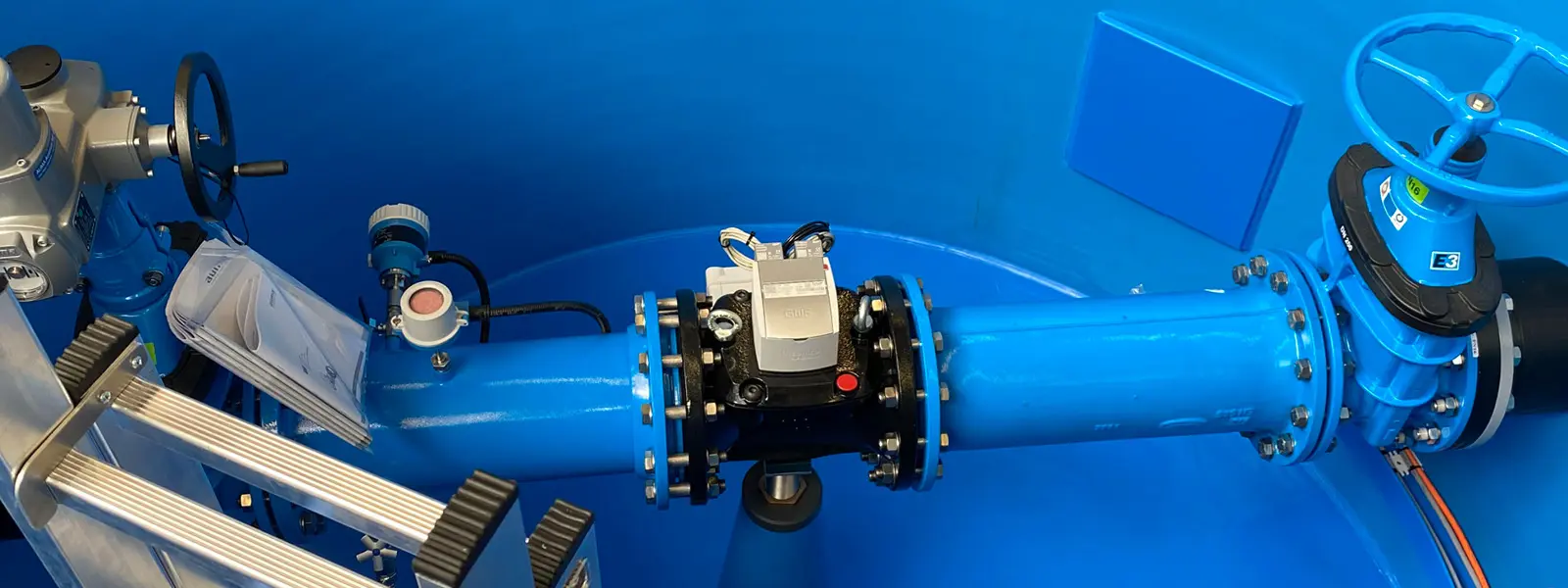
Pump stations are the dynamic engines of modern water infrastructure. They move drinking water across cities, transport wastewater to treatment facilities, enable irrigation across agricultural landscapes, and support industrial processes that depend on reliable water supply. Hidden beneath streets, inside treatment plants, or located along transmission pipelines, these facilities perform one of the most energy-intensive tasks in the water cycle: moving vast quantities of water against gravity and hydraulic resistance.
Because pumping consumes enormous amounts of electricity, the efficiency of pump station operation directly affects operational costs, sustainability goals, and infrastructure reliability. At the heart of this efficiency lies one fundamental variable: flow.
Accurate flow measurement enables operators to determine whether pumps are operating at their optimal efficiency point, identify abnormal hydraulic behavior, balance parallel pumps, and detect leaks or system inefficiencies. Yet pump stations are also among the most difficult locations in which to measure flow reliably.
Turbulent hydraulic conditions, compact pipe layouts, rapidly changing flow rates, and strict energy efficiency requirements create an environment where conventional flow meters often struggle.
The SONICO® EDGE ultrasonic flow meter was engineered specifically to address these challenges. By combining advanced ultrasonic measurement with the patented Time-Reversed Acoustics (TRA) principle and GWF’s proprietary 4D Technology® , SONICO® EDGE delivers highly accurate flow measurement across an extended flow range even under severely disturbed flow conditions.
This white paper examines the hydraulic parameters of pump station operation, explains the crucial importance of precise flow measurement for pump efficiency and energy optimization, and demonstrates how SONICO® EDGE meets the specific technical requirements of such applications. Thanks to its innovative measurement principle and robust technical design, SONICO enables® EDGE enables pump stations to evolve from mechanical infrastructure into intelligent, data-driven hydraulic systems.
Leave your contact details. You will receive the requested document immediately at your email address. Your data will not be used for advertising purposes without your consent.